Homemade Potato Gnocchi
Side
SideHomemade Potato Gnocchi
Lukas Ashley
Home Planet Kitchen

Homemade Potato Gnocchi

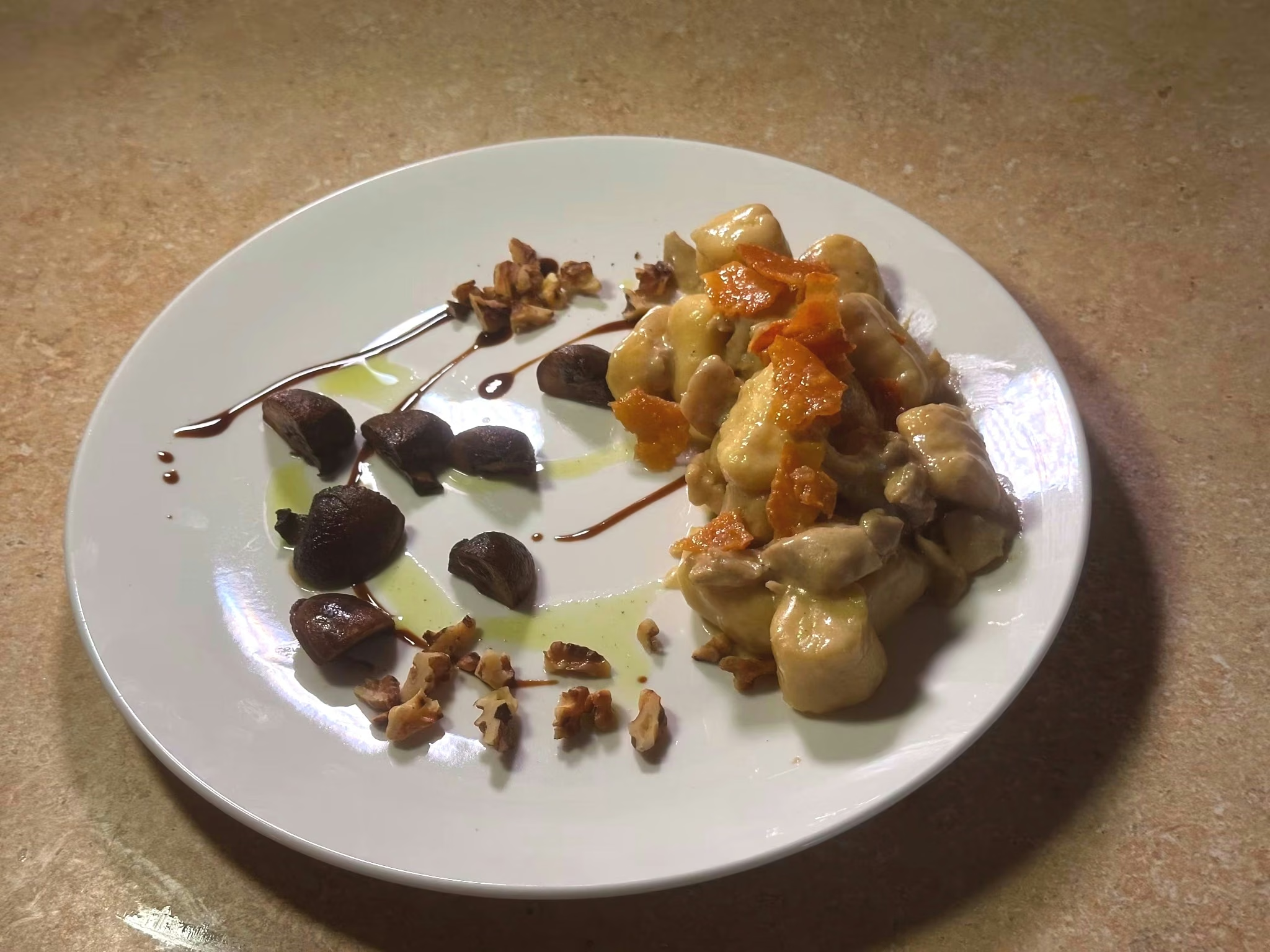
There's a specific kind of satisfaction in food that takes real time, the kind you can't rush no matter how hungry you are. Gnocchi is that food. Potato dumplings, Italian in origin, the kind of thing generations of nonnas rolled out by hand on Sunday afternoons because that was simply how it was done. When I think about making gnocchi from scratch, this time I wanted something specific: pillowy, soft gnocchi that my girlfriend could actually eat, since she's gluten free. What came out of it was a dish built piece by piece, literally, with every single dumpling shaped and ridged by hand before it ever hit the water.

A Dish Built By Hand

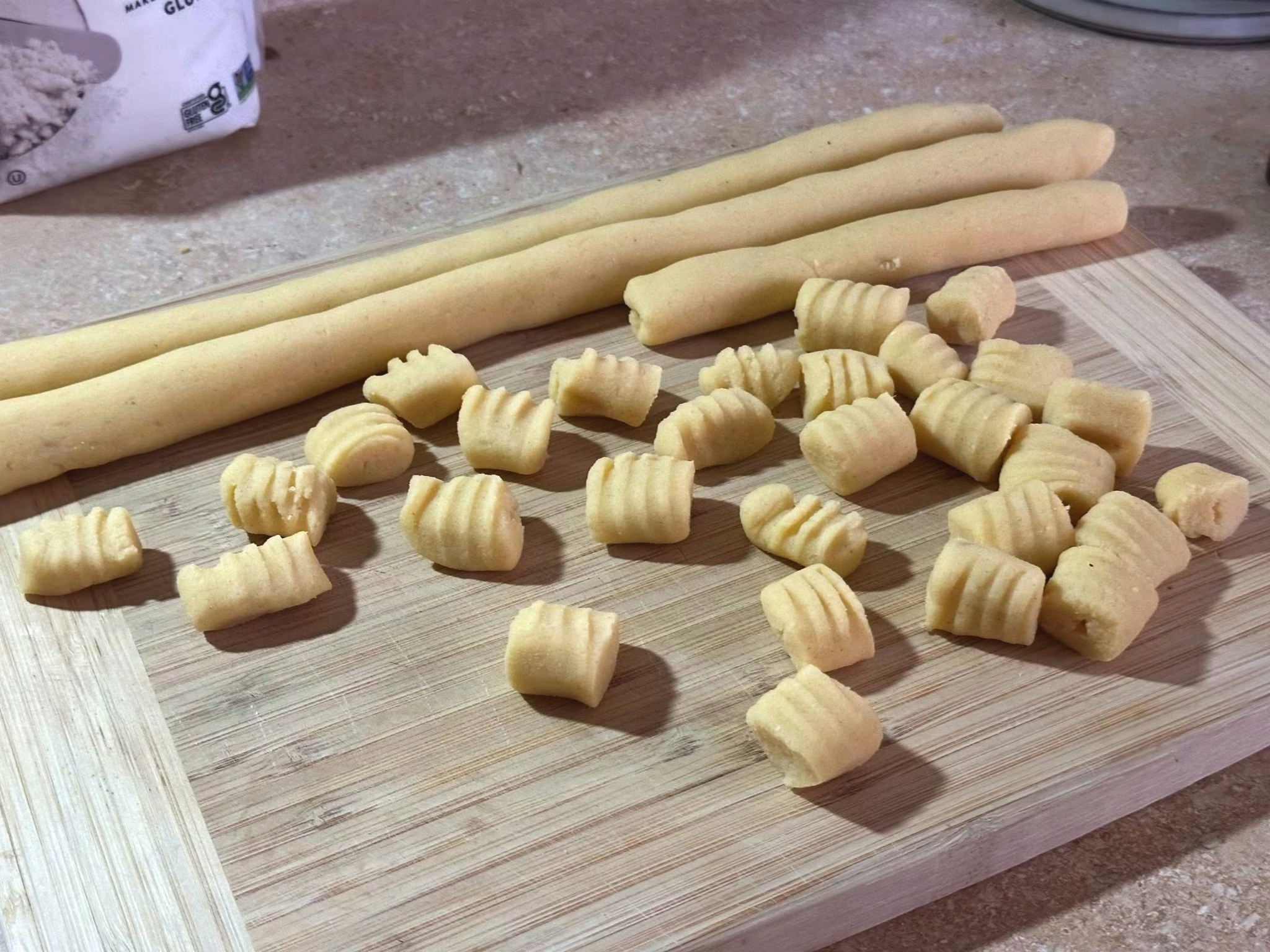
Some recipes you rush. Gnocchi doesn't let you. Once the dough came together, I was rolling ropes, cutting them into little pillows, and pressing each one against a fork to leave a ridge. It's slow, repetitive work, and I loved every second of it. There's something genuinely fun about handling dough that soft, giving each piece its own little indent, knowing that texture is going to catch sauce later. It's the kind of process that makes you understand why gnocchi has stayed a hand-made dish for so long. Machines can't replicate the feel of getting it right by touch.
Keep The Water Out

Baking the potatoes instead of boiling them made a real difference here. Boiling, or even piercing the skin to test doneness early, lets water seep into the flesh, and a wetter potato means more flour to compensate, which means denser gnocchi. Baking keeps the potato dry and heats evenly all the way through, so the dough needs less flour to come together. I don't own a ricer, so I used a fine grater instead, holding each potato by the skin and pushing the flesh across the holes until just the skin was left in my hand. A ricer gives a slightly finer texture, but the grater method works.

Made For Two

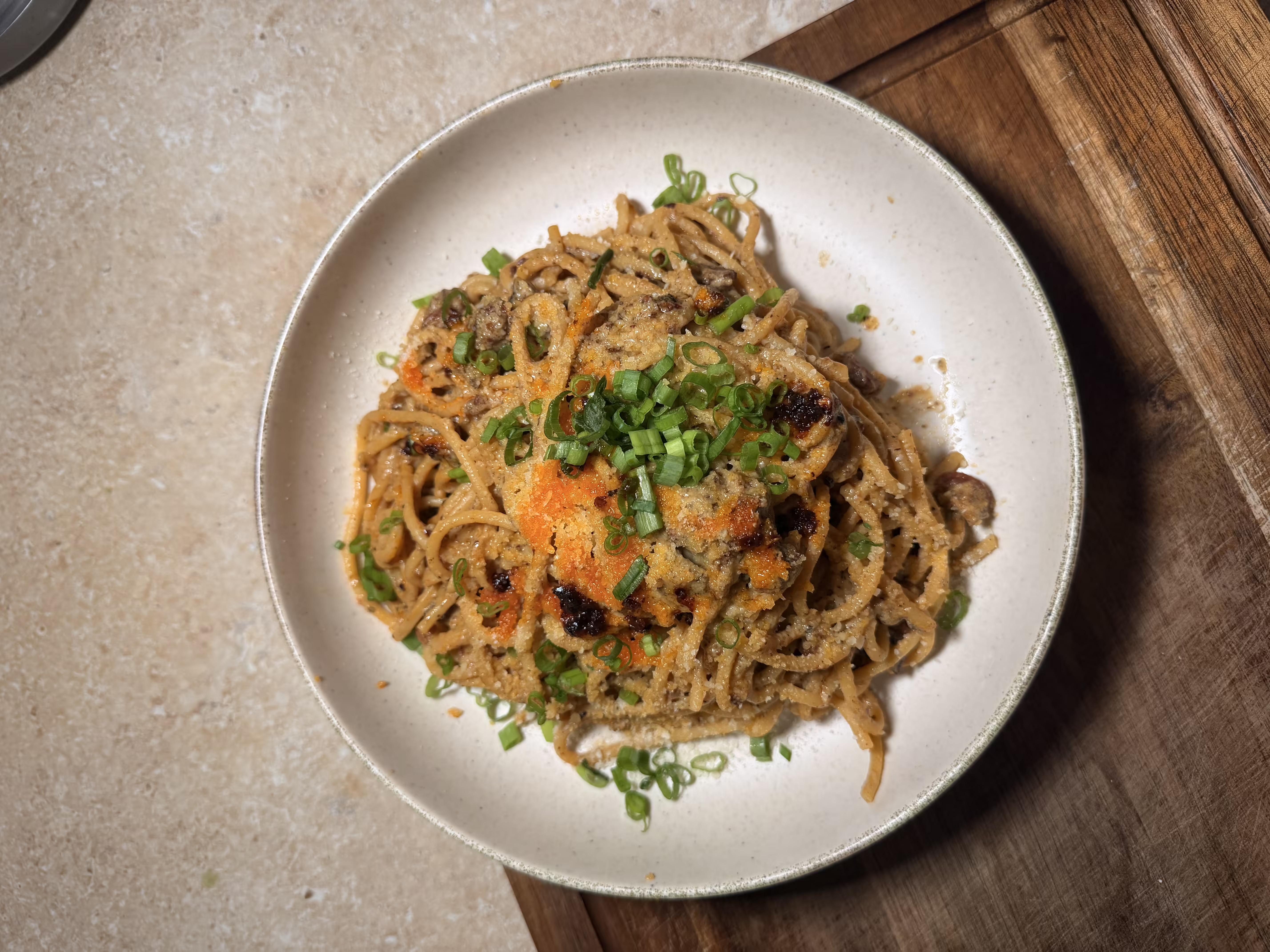
Making the gluten-free version wasn't an afterthought, it was the whole reason I made this. A 1:1 GF flour blend, a whole egg for extra binding, and a little xanthan gum for structure got the dough to hold together not quite as well as the traditional version, but still good. The end product was a gnocchi that was pillowy and soft. That mattered more to me than getting it exactly traditional. Next time I'll salt the dough harder than instinct tells me to, since potato flavor fades fast, and I'm adding a pinch of nutmeg for warmth.
Prep1 hr 30 min
Cook10 min
Total1 hr 40 min
Serves4
DifficultyHard
Lukas's Note

There's something about making a dish gluten free from the start, instead of adapting it after the fact, that changes how it feels to cook. It wasn't about compromise, it was about making sure something I loved could be shared with someone I love. Every ridge I pressed into that dough was for both of us.

Homemade Potato Gnocchi
Ingredients
Makes
4
servings

Traditional

  • 2 lb russet potatoes
  • ¾–1 cup all-purpose flour, plus more for dusting
  • 1 egg yolk
  • 1 tsp kosher salt

Gluten-Free

  • 2 lb russet potatoes
  • ¾ cup gluten-free 1:1 flour, plus more as needed and for dusting
  • 1 whole egg
  • 1 egg yolk
  • 1 tsp kosher salt
  • ¼ tsp xanthan gum

Equipment

  • Potato ricer (or fine/small-hole grater)
  • Baking sheet
  • Bench scraper or knife
  • Fork (for ridging)
  • Large pot
  • Spider or slotted spoon
Instructions
  1. Bake the potatoes. Heat the oven to 425–445°F. Pierce the potatoes and bake until completely tender, about 45–65 minutes depending on size. A thin knife should meet almost no resistance. Split them open right out of the oven so steam escapes, and let cool just until comfortable to handle.
  2. Process the potatoes. With a ricer, peel and rice the flesh while still warm. With a fine grater, leave the skins on and hold each potato by the skin, pushing the flesh across the grater until mostly skin remains. Spread the processed potato thin and let it steam-dry 5–10 minutes. You want about 1½ lb / 680 g cooked potato.
  3. Make the dough. For traditional, add flour, egg yolk, and salt. For gluten-free, add the GF flour, whole egg, egg yolk, salt, and xanthan gum. Gently bring together into a soft dough without aggressive kneading. If too sticky, add flour a tablespoon at a time, stopping as soon as it holds together.
  4. Shape. Divide the dough into portions. On a lightly floured surface, roll each into a ¾-inch rope. Cut into ¾–1-inch pieces. Leave rustic or roll each against a fork for ridges.
  5. Test. Bring a large pot of well-salted water to a gentle boil. Cook one tester piece. It should sink, then float. Once it floats, cook about 30 more seconds. If it holds together, cook the batch. If it breaks apart, work a little more flour into the remaining dough and test again.
  6. Cook. Cook in batches to avoid overcrowding. Once they float, cook about 30 seconds longer. Remove with a spider or slotted spoon rather than draining in a colander. Ready to sauce, brown, or use in another dish.
Nutrition per serving (estimated)
Calories
240 kcal
Protein
6 g
Carbs
50 g
Fat
2 g
Sodium
590 mg
Estimates only. Values vary based on ingredients and exact portion size.
Recipe Notes
  1. No ricer needed. A fine grater works well: hold the potato by the skin and push the flesh across the holes.
  2. Salt more assertively than feels natural. Potato flavor is subtle and needs the help.
  3. A pinch of nutmeg in the dough adds a nice warm background note.
  4. Pairs especially well with a Gorgonzola cream sauce to cut the richness.
  5. The gluten-free version uses a 1:1 GF flour blend, a whole egg plus a yolk, and xanthan gum for structure, and comes out pillowy and soft, though slightly less cohesive than the traditional version.
StoryRecipeNutritionNotes